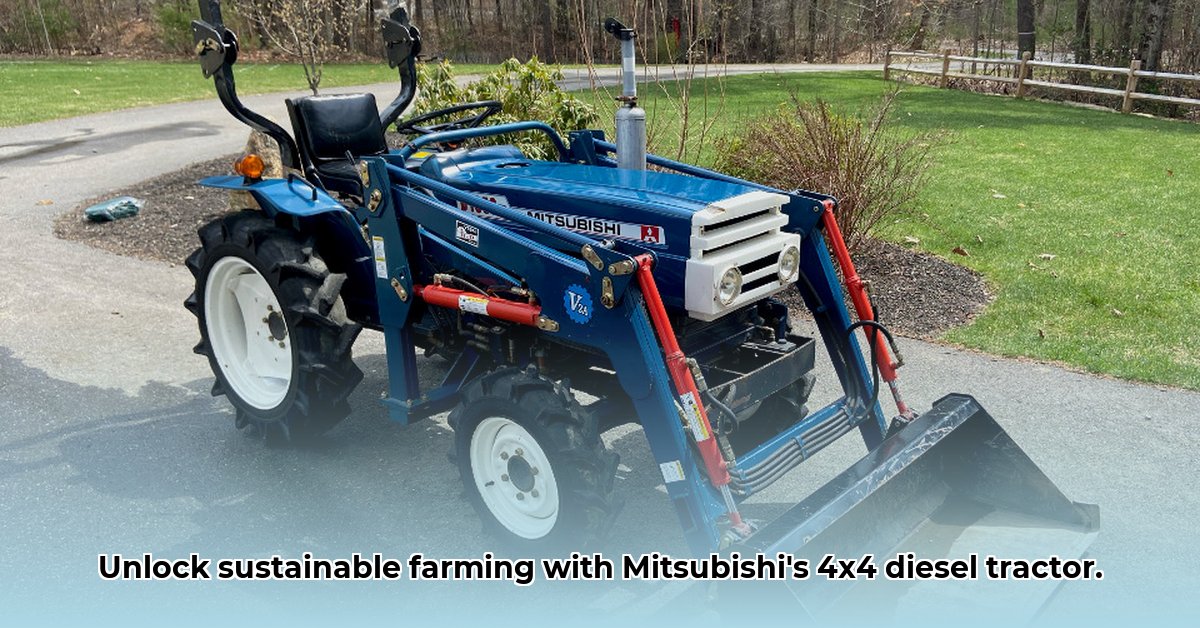
Choosing the right tractor is crucial for modern farmers, particularly those prioritizing sustainable practices. This comparative analysis examines two Mitsubishi 4x4 diesel models – the MT372 and the MT2201D – to help you decide which best aligns with your operational and environmental goals. We will analyze fuel efficiency, environmental impact, durability, versatility, cost, and suitability for different farm sizes. While comprehensive data is limited, this analysis aims to highlight key considerations and identify areas needing further research. For more tractor options, check out other tractor brands.
Model Descriptions: MT372 vs. MT2201D
The Mitsubishi MT372 is a compact utility tractor designed for smaller farms or precision agriculture operations. Its smaller engine size promises maneuverability and potentially lower fuel consumption. The MT2201D, on the other hand, is a heavier-duty model suited for medium to large-scale operations requiring greater horsepower for more demanding tasks. This difference in size and power directly impacts various aspects of sustainability.
Comparative Analysis: Key Sustainability Factors
Fuel Efficiency
While precise fuel consumption data (liters/hectare or gallons/acre) is unavailable for both models, the MT372's smaller engine suggests better fuel economy than the MT2201D. This is a crucial factor, as reduced fuel consumption directly translates to lower operating costs and a reduced carbon footprint. However, without concrete data, this remains a tentative comparison. Further research is needed to quantify this difference.
Environmental Impact
Quantifying the environmental impact requires data on greenhouse gas emissions (CO2, methane, nitrous oxide) across the tractor's lifecycle. Unfortunately, this critical information is currently absent for both the MT372 and MT2201D. This gap prevents a robust comparison of their respective environmental footprints. We strongly urge manufacturers to provide this essential data for consumers.
Durability and Longevity
Assessing durability requires data on expected lifespan, ease of repair, and end-of-life management options. Limited information prevents a definitive comparison. Factors such as material quality, design robustness, and readily available parts directly affect a tractor's lifespan and overall sustainability. Long-term studies are needed to provide meaningful insights into both models' longevity.
Versatility and Implement Compatibility
The MT2201D's greater power and capacity allow for a broader range of implement compatibility, enhancing its versatility. This reduces the need for multiple specialized machines, promoting efficiency and minimizing the environmental impact associated with manufacturing and transporting additional equipment. The MT372, while capable of many tasks, offers less versatility.
Cost: A Holistic Perspective
Evaluating cost involves considering the initial purchase price, ongoing maintenance, fuel expenses, and potential repair costs. While the MT372 likely has a lower initial purchase price, the total cost of ownership over its lifespan requires a more comprehensive analysis, including data on maintenance intervals and repair needs. This data is crucial for a complete economic sustainability assessment.
Suitability for Different Farm Sizes
The MT372 is best suited for smaller farms needing maneuverability and precision. Its compact size minimizes soil compaction and crop damage. The MT2201D, with its higher horsepower, is better equipped for larger farms tackling more extensive and demanding tasks.
Sustainability Assessment
Based on the available—albeit limited—information, the MT372 appears more fuel-efficient, but lacks the versatility of the MT2201D. The absence of crucial data on emissions and longevity prevents a comprehensive sustainability ranking. A holistic assessment demands further research.
Recommendations
- Data Transparency: Farmers should demand comprehensive specifications from manufacturers, including detailed fuel consumption, emission data, and lifecycle assessments.
- Lifecycle Cost Analysis: Thoroughly evaluate the total cost of ownership for each model, factoring in all expenses over the tractor's expected lifespan.
- Match Tractor to Farm Size: Select a tractor whose power and capacity align with your operational needs to avoid both underpowering and excessive fuel consumption from oversizing.
- Prioritize Preventative Maintenance: Regular maintenance is crucial for extending a tractor's lifespan and reducing its environmental impact.
- Explore Sustainable Practices: Implement sustainable farming techniques to complement the choice of equipment.
Conclusion
This analysis highlights the need for improved data transparency concerning the environmental and economic sustainability of agricultural machinery. While the MT372 and MT2201D offer different strengths, a definitive assessment of their relative sustainability requires further research and more complete data from Mitsubishi and other industry stakeholders. Informed decision-making about agricultural equipment necessitates comprehensive information that is currently lacking.